Your roof insulation expert
Isoleaz assists you with your roof insulation in Luxembourg
Isoleaz assists you with your roof insulation in Luxembourg
Home » Roof Insulation
Our experts will assist you in obtaining grants for insulating your home.
We provide personalized support for each project before, during, and after the work.
Collaborating with Isoleaz guarantees quality work by certified experts.
EXCELLENTTrustindex vérifie que la source originale de l'avis est Google. Je suis très satisfaite du bon travail effectué. Très Ravi deu résultats.je le recommande vivement. Merci a vousPublié sur GoogleTrustindex vérifie que la source originale de l'avis est Google. Entreprise très professionnelle, suivi très rapide à la demande de devis. Des professionnels très compétents, aimables et disponibles à répondre à toutes mes questions et proposer des solutions. À recommander !Publié sur GoogleTrustindex vérifie que la source originale de l'avis est Google. Entreprise très sérieuse qui a refait l'isolation et le ravalement de notre façade. Qualité au top et rapidité d'exécution remarquable. Quelques soucis de communication au début qui ont rapidement été réglés. Je tiens également à souligner le professionnalisme et la disponibilité d'Alex.Publié sur GoogleTrustindex vérifie que la source originale de l'avis est Google. tres satisfait du résultat et de l'équipe. Du très bon travailPublié sur GoogleTrustindex vérifie que la source originale de l'avis est Google. Très satisfait du résultat merci à Alex pour la qualité de son travail et sa sympathie. Je recommande à 100%Publié sur GoogleTrustindex vérifie que la source originale de l'avis est Google. Entreprise dynamique, équipe motivée et professionnelle. Travail réalisé dans les délais convenus (en tenant compte qu'ils ne gèrent pas encore la météo). Isoleaz s'occupe tout, je recommande!Publié sur GoogleTrustindex vérifie que la source originale de l'avis est Google. Ouvriers très soigneux pour l'isolation du plafond de mes caves. Le travail était pourtant délicat en raison des nombreux tuyaux, chemins de câbles et autres fixés au plafond. Travail très professionnel.Publié sur GoogleTrustindex vérifie que la source originale de l'avis est Google. Merci à ISOLEAZ. Les travaux d'isolation des pignons de notre maison ont été parfaitement réalisés. Travail propre et soigné. Nous sommes très satisfaits.Publié sur GoogleTrustindex vérifie que la source originale de l'avis est Google. Société à recommander : Sylvain, le délégué commercial, n'a pas hésité à revenir chez moi pour répondre à mes questions. Les ouvriers ont très bien travaillé, très méticuleux, et très rapides. Et à propos du chef de chantier, Vincent, il est aussi très "pro". Et tout ça mérite les 5 étoiles :)Publié sur GoogleTrustindex vérifie que la source originale de l'avis est Google. Je suis vraiment ravi du travail effectué par les équipes Isolaez chez moi. Ils ont réalisé l'ensemble de l'isolation de la maison, et je n'ai eu aucun commentaire a faire étant donné le professionnalisme dont ils ont fait preuve, ce qui n'est pas commun.
At Isoleaz, we handle all types of roof insulation projects in Luxembourg. Our team of qualified professionals carefully analyzes each situation to offer you the best solution for your home, and supports you from the initial site visit to the final handover of the project.
The roof is one of the most thermally critical areas of a building. Without effective insulation, heat loss through the roof can account for up to 30% of a home’s total heat loss, making it the most impactful area of energy renovation that should be addressed as a priority. In summer, a poorly insulated roof allows outside heat to penetrate and overheats the attic spaces. In winter, the heat produced by the heating system escapes, forcing the equipment to run longer and consume more energy.
In Luxembourg, where summers are gradually getting hotter and winters remain harsh, insulating the building envelope is a particularly profitable long-term investment. The savings on heating and cooling bills can be substantial, and the improved Energy Performance Certificate (EPC) directly increases the property’s value on the real estate market.
Roof insulation can also be considered as part of a roof renovation. When tiles or slates reach the end of their life, combining the two interventions into a single project optimizes the budget and limits disruption for the occupants.
Ask our team of experts for advice
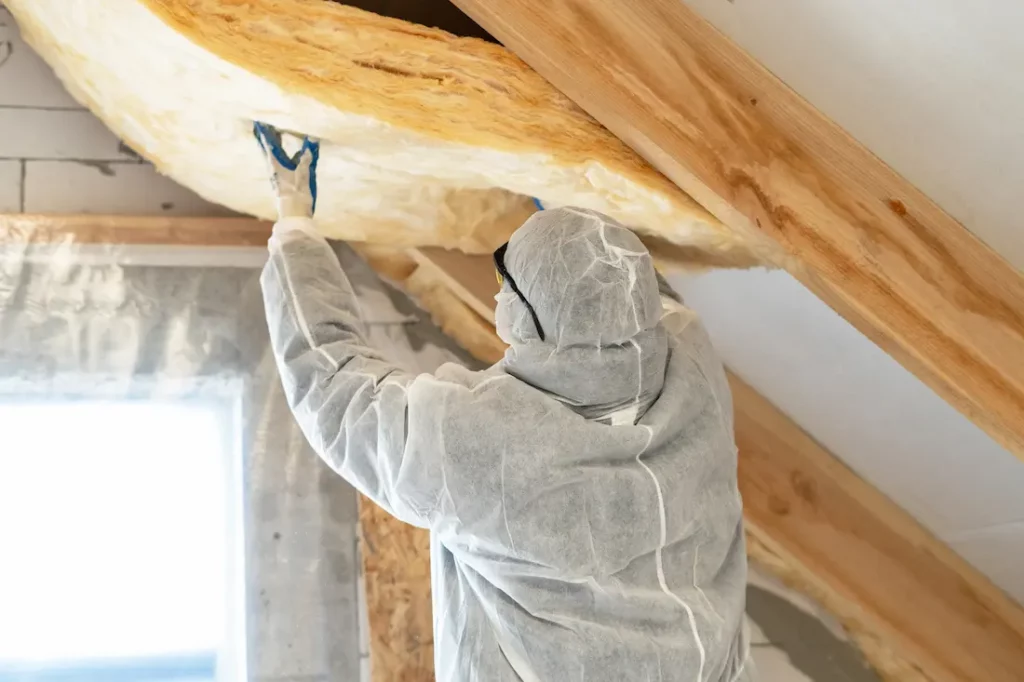
Interior insulation is the most common technique, especially when the attic is converted or intended to be converted. It involves installing insulating materials between the rafters or trusses of the roof structure, from inside the dwelling. To enhance thermal performance and prevent condensation, a vapor barrier is always installed alongside the insulation layer.
This method offers several significant advantages:
However, its limitations should be anticipated. Installing insulation between the rafters slightly reduces the ceiling height, and the affected rooms must be vacated for the duration of the work. Finishing work, such as painting or installing new wall coverings, will be necessary after the work is completed.
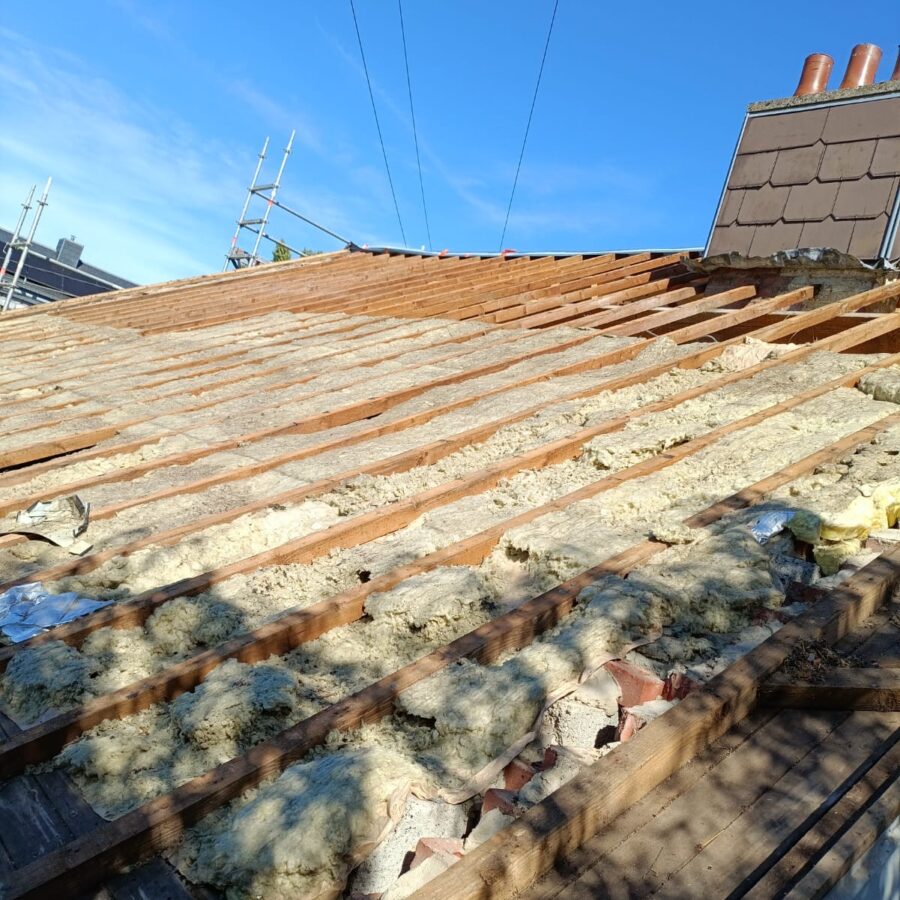
Exterior insulation involves removing the existing roof covering, such as tiles or slates, and installing the insulation directly onto the roof deck before replacing or renewing the covering. This is the most thermally efficient solution because it eliminates almost all thermal bridges by treating the building envelope continuously and without interruption.
This technique is particularly recommended in two situations: when the roof covering is in poor condition and needs to be replaced, or in the case of a flat roof, where interior insulation can promote condensation and lead to moisture problems.
Its main strengths are as follows:
Its main drawback is its price, which is significantly higher than interior insulation. This is why it is most often carried out simultaneously with roof replacement, in order to share installation and labor costs.
Choosing insulation is a crucial decision that depends on the chosen technique, the roof configuration, and the desired performance levels. Several types are available on the market.
Insulation generally comes in two main forms:
La laine de verre et la laine de roche sont les matériaux les plus utilisés pour l'isolation de toiture, aussi bien par l'intérieur que par l'extérieur. Leurs performances thermiques et acoustiques sont reconnues, leur résistance au feu est élevée, et leur rapport qualité-prix reste compétitif.
La laine de roche se distingue par sa densité et sa capacité à conserver ses propriétés même en présence d'humidité, ce qui la rend particulièrement adaptée aux toitures exposées.
Dans le cas d'une toiture-terrasse, certains matériaux sont spécifiquement adaptés aux contraintes de ce type de surface. Le polyuréthane, le verre cellulaire et la perlite expansée figurent parmi les solutions les plus performantes pour ce cas de figure.
Leur résistance à l'humidité et leur capacité portante en font des choix pertinents pour les toits plats ou à très faible pente.
Pour les propriétaires souhaitant privilégier des matériaux à faible impact environnemental, plusieurs alternatives naturelles sont disponibles : la ouate de cellulose, les fibres de bois, le liège expansé ou encore le chanvre. Ces isolants offrent de bonnes performances thermiques et une régulation naturelle de l'humidité, tout en présentant un bilan carbone plus favorable que les matériaux synthétiques. Ils sont particulièrement adaptés aux projets de rénovation écologique ou aux bâtiments à ossature bois.
Nos conseillers Isoleaz vous guident dans le choix du matériau le mieux adapté à votre toiture, en tenant compte de la technique retenue, de votre budget et de vos priorités en matière de durabilité.
Ask our team of experts for advice
The cost of roof insulation varies depending on several factors: the technique chosen, the surface area to be treated, the material selected, the condition of the roof structure, and the constraints of site access.
Installation on the roof, without loss of living space
Installation under sloping roofs, ideal for occasional renovations
At Isoleaz, we provide you with a complete and personalized quote within a maximum of 24 hours, giving you a clear overview of the budget before any commitment.
Several public aid schemes are available in the Grand Duchy to finance roof insulation work and reduce the initial investment.
Managed by the Klima-Agence, the Klimabonus Wunnen is Luxembourg’s main subsidy for the energy renovation of existing housing. It covers roof insulation work, provided that the thermal performance levels achieved meet the thresholds defined by the program. This scheme is available to both owner-occupiers and landlords, subject to conditions specified by the Klima-Agence.
The PRIMe House grant provides additional financial support for energy efficiency improvements, including roof insulation. The grant amount depends on the type of work carried out, the performance results achieved, and the applicant’s profile. Applications are processed according to a set schedule, so it is advisable to begin the process well in advance of starting the work.
Renovation work carried out on a Luxembourg property that is more than two years old benefits from a reduced VAT rate of 3%, compared to the standard rate of 17%. This reduction is applied without any special administrative procedures and represents an immediate and significant saving on the total bill.
Some municipalities in the Grand Duchy offer additional local subsidies for roof insulation work. These subsidies vary from one municipality to another, both in form and amount. The myenergy portal makes it easy to identify the subsidies available in your municipality and is a useful starting point for preparing your application.