Our experts will assist you in obtaining grants for the insulation of your home.
Tailored support
We provide personalized support for each project before, during, and after the work.
Your insulation expert
Collaborating with Isoleaz is a guarantee of quality work by approved experts
Publié sur Google
Rosette Gadjeu
25/07/2025
Trustindex vérifie que la source originale de l'avis est Google.
Je suis très satisfaite du bon travail effectué.
Très Ravi deu résultats.je le recommande vivement. Merci a vous
Publié sur Google
Marta Villar
09/07/2025
Trustindex vérifie que la source originale de l'avis est Google.
Entreprise très professionnelle, suivi très rapide à la demande de devis. Des professionnels très compétents, aimables et disponibles à répondre à toutes mes questions et proposer des solutions. À recommander !
Publié sur Google
Quentin Luc
01/07/2025
Trustindex vérifie que la source originale de l'avis est Google.
Entreprise très sérieuse qui a refait l'isolation et le ravalement de notre façade. Qualité au top et rapidité d'exécution remarquable.
Quelques soucis de communication au début qui ont rapidement été réglés.
Je tiens également à souligner le professionnalisme et la disponibilité d'Alex.
Publié sur Google
Nicolas Petit Photography
01/07/2025
Trustindex vérifie que la source originale de l'avis est Google.
tres satisfait du résultat et de l'équipe. Du très bon travail
Publié sur Google
Alexandre Philibossian
25/06/2025
Trustindex vérifie que la source originale de l'avis est Google.
Très satisfait du résultat merci à Alex pour la qualité de son travail et sa sympathie. Je recommande à 100%
Publié sur Google
Bertrand Vantassel
25/06/2025
Trustindex vérifie que la source originale de l'avis est Google.
Entreprise dynamique, équipe motivée et professionnelle. Travail réalisé dans les délais convenus (en tenant compte qu'ils ne gèrent pas encore la météo). Isoleaz s'occupe tout, je recommande!
Publié sur Google
Eric De Keghel
21/06/2025
Trustindex vérifie que la source originale de l'avis est Google.
Ouvriers très soigneux pour l'isolation du plafond de mes caves. Le travail était pourtant délicat en raison des nombreux tuyaux, chemins de câbles et autres fixés au plafond. Travail très professionnel.
Publié sur Google
Pieter DE REUSE
13/06/2025
Trustindex vérifie que la source originale de l'avis est Google.
Merci à ISOLEAZ. Les travaux d'isolation des pignons de notre maison ont été parfaitement réalisés. Travail propre et soigné. Nous sommes très satisfaits.
Publié sur Google
Brigitte Louviaux
12/06/2025
Trustindex vérifie que la source originale de l'avis est Google.
Société à recommander : Sylvain, le délégué commercial, n'a pas hésité à revenir chez moi pour répondre à mes questions. Les ouvriers ont très bien travaillé, très méticuleux, et très rapides. Et à propos du chef de chantier, Vincent, il est aussi très "pro". Et tout ça mérite les 5 étoiles :)
Publié sur Google
Frédéric Beaugendre
11/06/2025
Trustindex vérifie que la source originale de l'avis est Google.
Je suis vraiment ravi du travail effectué par les équipes Isolaez chez moi. Ils ont réalisé l'ensemble de l'isolation de la maison, et je n'ai eu aucun commentaire a faire étant donné le professionnalisme dont ils ont fait preuve, ce qui n'est pas commun.
Whether you need interior facade renovation, exterior insulation, or cavity wall treatment, Isoleaz handles all types of wall insulation projects in Luxembourg. Our specialists will visit your property to assess your needs, guide you toward the best solution, and oversee the entire project from start to finish, from the initial site visit to handing over the keys.
Wall insulation: what are we talking about?
Whether the project is a complete renovation or new construction, walls play a central role in a home’s thermal performance. Constantly exposed to climatic variations, they constitute one of the main points of heat loss from heating systems. Depending on the building’s configuration, this heat loss can represent up to 25% of the total heat loss in a poorly insulated home.
In Luxembourg, where winters are cold and damp and energy costs are a persistent burden on budgets, insulating walls is one of the most tangible ways to reduce energy bills. This work also impacts the Energy Performance Certificate (EPC), a mandatory document for any sale or rental of a property in the Grand Duchy. This certificate classifies homes from A to I: well-executed wall insulation often allows a property to move up several classes at once, which directly translates into a higher market value.
Technically, insulating walls involves inserting materials with low thermal conductivity between the load-bearing structure and the environment, in order to slow down heat exchange and stabilize the interior temperature. Two main approaches exist: interior insulation (ITI) and exterior insulation (ITE), each with distinct characteristics and application conditions.
Interior wall insulation (ITI)
Internal thermal insulation (ITI) is the most frequently chosen method in renovation projects, particularly because it requires a smaller budget than external insulation. It involves attaching insulating panels to the inner face of the walls, creating a thermal barrier without altering the facade.
Several situations support its use:
It preserves the building’s exterior appearance, which is crucial for housing located in historic Luxembourg districts subject to heritage constraints.
It allows for the correction of surface irregularities and the improvement of the overall condition of interior walls.
It allows for a gradual renovation, room by room, which makes it possible to spread the work and expenses over time.
Its limitations also exist. Internal thermal insulation (ITI) slightly reduces living space depending on the thickness of the insulation installed. It also requires emptying the rooms involved for the duration of the work and may necessitate the relocation of electrical outlets, radiators, or ventilation ducts, thus lengthening the intervention time.
Exterior wall insulation (EWI)
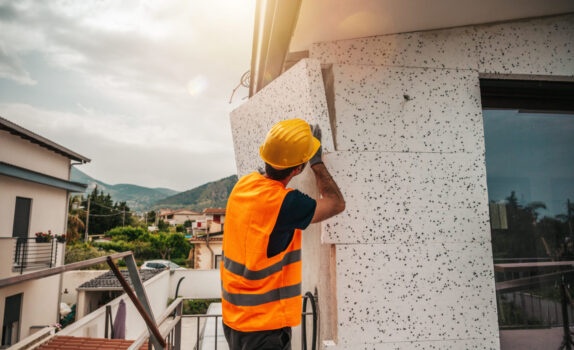
External thermal insulation (ETI) envelops the building with an insulating system installed on the exterior walls, covered with a finishing layer. It is recognized as the most comprehensive thermal insulation technique: by treating the building envelope continuously, it eliminates virtually all thermal bridges without exception.
Its advantages are numerous:
The interior living space remains unaffected, with the teams working entirely from the outside.
The building’s thermal inertia improves: the walls accumulate heat and release it gradually
Facade renovation can be combined with insulation in a single operation, for a result that is both thermal and aesthetically pleasing.
The beneficial effects are present in both winter and summer, by slowing the penetration of outside heat during warm periods.
However, it does involve some constraints that need to be considered. Its cost is higher than ITI (Integrated Thermal Insulation), it requires scaffolding, and it alters the building’s exterior appearance. In certain Luxembourgish contexts, particularly for properties located within regulated architectural ensembles, prior municipal authorization may be required. Our experts will review these points with you before any decision is made.
Why insulate the walls of your home?
The tangible benefits of wall insulation
The benefits of well-executed wall insulation are felt quickly, sometimes within the first few weeks after the work is completed.
Thermal comfort in all seasons
In winter, heat escapes less quickly, which reduces the strain on the heating system. In summer, it takes longer for the outside heat to penetrate, maintaining a comfortable indoor atmosphere without the need for air conditioning. This temperature stability tangibly improves the quality of daily life.
Protection against moisture
Insulating the walls enhances the overall airtightness of the building envelope, protecting it against water infiltration and the effects of humidity. In Luxembourg, where rainfall is frequent and winters can be damp, this extra protection is crucial..
Better acoustic comfort
Most thermal insulation materials also offer good soundproofing properties, reducing the transmission of outside noise into living spaces. In Luxembourg's urban and suburban areas with heavy traffic, this is an important factor for many families.
Value of the property reinforced
A better insulated dwelling has a better energy performance certificate (EPC), which strengthens its position in a Luxembourg real estate market where buyers and tenants are paying increasing attention to the energy performance of the properties they are interested in.
Disadvantages to consider
Like any large-scale project, wall insulation involves constraints that are best identified beforehand..
The initial cost remains the main point of contention for many homeowners. External thermal insulation (ETI) is the most effective solution but also the most expensive. Internal thermal insulation (ITI) is more affordable, but it requires vacsing the affected rooms during the work, which can disrupt household routines while the project is underway.
In both cases, it's a long-term investment. Savings on energy bills allow the expense to be gradually recouped, and the support schemes available in Luxembourg significantly reduce the amount the homeowner has to pay.
The stages of a wall insulation project
Before any work begins, one of our experts will visit your home to assess the project's feasibility, analyze your property's specific characteristics, and identify the most suitable technique for your situation. Once this assessment is complete and the quote is accepted, the work can be scheduled.
The typical process of wall insulation work follows several successive phases. :
1
Delivery and installation of equipment
Transport of the equipment necessary for carrying out the work, taking care to organize the site in such a way as to limit the nuisance to the occupants.
2
Preparation and protection of the area
Securing and protecting the work area, in order to guarantee a clean, safe worksite that respects your indoor or outdoor environment.
3
Installation of insulation
Installation of the thermal and/or acoustic insulation selected according to the objectives of the project and the characteristics of the substrate.
4
Fixing and undercoats
Fixing the insulating panels and applying the base coats, which form the basis of the finish and guarantee the long-term mechanical strength of the system.
5
Finishing and cleaning
Application of the finishing coat according to the chosen solution (plaster, cladding or other coating), followed by a complete cleaning of the intervention area to leave you with an impeccable space.
What insulation materials should I choose for the walls?
Choosing the right insulation material is a crucial decision that directly impacts the performance of the installed system and its long-term durability. Three main types of insulation are available on the market, each with its own specific characteristics.
Mineral insulators
Glass wool and rock wool are the most common examples of this type of insulation. Made from sand or volcanic rock, they offer an excellent balance of thermal performance, fire resistance, and durability. Their cost is generally competitive, making them a popular choice for renovation projects. Rock wool is particularly distinguished by its ability to retain its properties even under mechanical stress and by its exceptionally high fire resistance.
Bio-based insulation
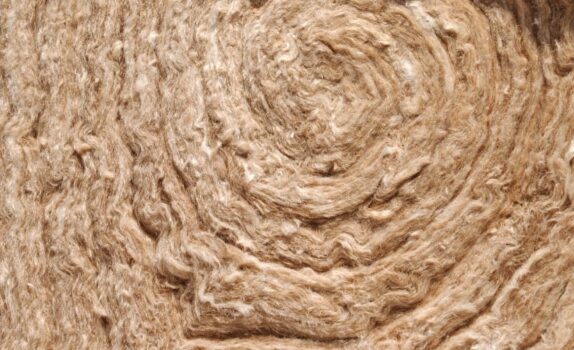
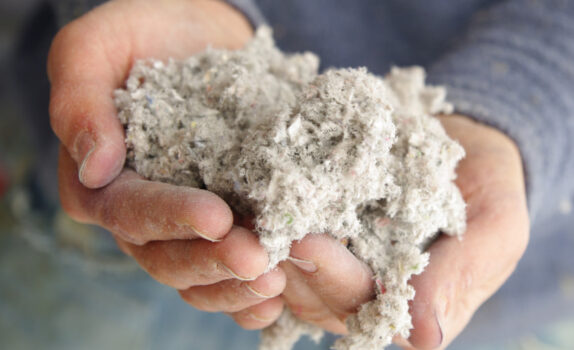
Bio-based materials are made from renewable natural resources: expanded cork, wood fiber, cellulose wadding, hemp, or sheep’s wool. They are increasingly appealing to homeowners concerned about reducing the environmental impact of their renovations. In addition to their ecological qualities, these insulation materials often offer good performance in terms of humidity regulation and summer comfort. Their ability to absorb and release moisture helps maintain healthy indoor air, which is a significant advantage in well-sealed homes.
Synthetic insulation
Expanded polystyrene (EPS), extruded polystyrene (XPS), and polyurethane foam belong to this family. Made from petrochemicals, they are distinguished by their lightness, excellent moisture resistance, and high thermal performance at a low thickness. These characteristics make them particularly suitable for certain specific applications, notably areas exposed to moisture or surfaces requiring very thin insulation. Their cost can be higher than that of mineral wool insulation, and their environmental impact is less favorable than that of bio-based materials.
At Isoleaz, our advisors help you choose the material best suited to your home, taking into account your priorities: thermal performance, budget, environmental impact and desired lifespan.
Possible finishes for your insulated walls
Once the insulation is installed, the choice of finish determines the final appearance of your facade or interior wall. Several options are available, each with its own unique character.
The plaster
Exterior wall rendering, commonly known as stucco, is the most frequently chosen finish for exterior insulation. Its application is relatively quick and its cost is among the most affordable on the market. It allows for a variety of finishes depending on the chosen texture (smooth, scraped, or sprayed) and is available in a wide range of colors. Stucco unifies the appearance of the facade while protecting it from the elements. It is available in mineral or synthetic versions, each with slightly different properties in terms of vapor permeability and flexibility.
The cladding
Cladding is experiencing growing popularity in façade renovation projects in Luxembourg. This covering, installed over the insulation system, can be made of wood, steel, aluminum, or PVC, depending on the desired architectural style and available budget. Wood cladding brings a natural and warm touch, while metal cladding is appealing for its robustness and longevity. This solution offers great creative freedom while ensuring effective protection of the building envelope.
The masonry wall
For those who prefer a more classic and particularly durable finish, installing new brick cladding is a serious option. This type of finish gives the building a timeless character and remarkable solidity, capable of withstanding decades without significant aesthetic degradation. While its cost is generally higher than other finishes, it represents a sound investment for homeowners seeking a long-lasting renovation.
What budget should you plan for wall insulation in Luxembourg?
The cost of wall insulation depends on several variables: the chosen method (interior or exterior insulation), the total surface area to be treated, the type of insulating material selected, the desired finish, and any potential site access constraints. Labor costs in Luxembourg are also higher than in neighboring countries, which must be factored into the budget estimate.
Generally, the cost of the work ranges from €130 to €160 excluding VAT per square meter, including all services. This figure can increase depending on the complexity of the project, the quality of the materials chosen, and the building’s architectural features.
For a precise and personalized estimate, please contact us. At Isoleaz, a detailed quote will be provided within 24 hours, with no obligation on your part.
Discover in detail all the grants and subsidies available for your insulation work in Luxembourg.