Your expert in exterior wall insulation
Isoleaz assists you with the insulation of your exterior walls in Luxembourg.
Isoleaz assists you with the insulation of your exterior walls in Luxembourg.
Home » Exterior wall insulation
Our experts help you obtain financial assistance for insulating your home.
We provide personalized support for each project before, during, and after the work.
Collaborating with Isoleaz means ensuring a job well done by certified experts.
EXCELLENTTrustindex vérifie que la source originale de l'avis est Google. Je suis très satisfaite du bon travail effectué. Très Ravi deu résultats.je le recommande vivement. Merci a vousPublié sur GoogleTrustindex vérifie que la source originale de l'avis est Google. Entreprise très professionnelle, suivi très rapide à la demande de devis. Des professionnels très compétents, aimables et disponibles à répondre à toutes mes questions et proposer des solutions. À recommander !Publié sur GoogleTrustindex vérifie que la source originale de l'avis est Google. Entreprise très sérieuse qui a refait l'isolation et le ravalement de notre façade. Qualité au top et rapidité d'exécution remarquable. Quelques soucis de communication au début qui ont rapidement été réglés. Je tiens également à souligner le professionnalisme et la disponibilité d'Alex.Publié sur GoogleTrustindex vérifie que la source originale de l'avis est Google. tres satisfait du résultat et de l'équipe. Du très bon travailPublié sur GoogleTrustindex vérifie que la source originale de l'avis est Google. Très satisfait du résultat merci à Alex pour la qualité de son travail et sa sympathie. Je recommande à 100%Publié sur GoogleTrustindex vérifie que la source originale de l'avis est Google. Entreprise dynamique, équipe motivée et professionnelle. Travail réalisé dans les délais convenus (en tenant compte qu'ils ne gèrent pas encore la météo). Isoleaz s'occupe tout, je recommande!Publié sur GoogleTrustindex vérifie que la source originale de l'avis est Google. Ouvriers très soigneux pour l'isolation du plafond de mes caves. Le travail était pourtant délicat en raison des nombreux tuyaux, chemins de câbles et autres fixés au plafond. Travail très professionnel.Publié sur GoogleTrustindex vérifie que la source originale de l'avis est Google. Merci à ISOLEAZ. Les travaux d'isolation des pignons de notre maison ont été parfaitement réalisés. Travail propre et soigné. Nous sommes très satisfaits.Publié sur GoogleTrustindex vérifie que la source originale de l'avis est Google. Société à recommander : Sylvain, le délégué commercial, n'a pas hésité à revenir chez moi pour répondre à mes questions. Les ouvriers ont très bien travaillé, très méticuleux, et très rapides. Et à propos du chef de chantier, Vincent, il est aussi très "pro". Et tout ça mérite les 5 étoiles :)Publié sur GoogleTrustindex vérifie que la source originale de l'avis est Google. Je suis vraiment ravi du travail effectué par les équipes Isolaez chez moi. Ils ont réalisé l'ensemble de l'isolation de la maison, et je n'ai eu aucun commentaire a faire étant donné le professionnalisme dont ils ont fait preuve, ce qui n'est pas commun.
For the insulation of your exterior walls in Luxembourg, Isoleaz intervenes at every stage: initial technical exchange, choice of solutions, monitoring of the site and acceptance of the work.
Few renovation projects produce such lasting benefits as exterior wall insulation. In a semi-detached house, approximately 20% of the heat generated by the heating system is lost through the front and rear walls. This figure rises to between 25% and 30% for a detached house, and can exceed 50% when the walls are made of poured concrete or concrete blocks without any interior insulation.
Our teams analyze your property, guide you towards the solutions best suited to your needs, and support you in complying with Luxembourgish regulations.
Exterior thermal insulation (ETI) is often the most comprehensive solution for Luxembourgish houses whose facades have never been treated. Its benefits extend to all seasons: less overheating in summer and better heat retention as soon as temperatures drop. When a facade also requires renovation, combining the two interventions into a single project represents a significant time saving and a real financial advantage.
External thermal insulation (ETI) is particularly well-suited when the facade shows signs of deterioration, when waterproofing is problematic, or when the walls lack usable cavities. This type of project requires rigorous preparation beforehand: Isoleaz structures your project from design to completion.
An exterior insulation project progresses according to a well-defined logic, step by step.
It all begins with the installation of the chosen insulating material: rock wool, wood fiber, or any other product eligible for Luxembourg subsidies. A thickness of between 14 and 20 cm is generally required to achieve a thermal resistance of approximately 3.7 m².K/W, in accordance with the recommendations in force in the Grand Duchy (source: renov.lu). Depending on the system chosen, the insulation is fixed either by gluing with a moisture-resistant adhesive or by mechanical anchoring to the substrate.
Everything here depends on the chosen finishing coat. A system under render doesn’t necessarily require an intermediate load-bearing structure. For ventilated cladding, however, a framework must be erected before the cladding is installed. This choice also determines how moisture will be managed within the wall over the long term.
The final phase involves installing the permanent exterior cladding. Cladding appeals to a large number of our clients for its contemporary look, but stucco or decorative plastering is equally well suited to the architectural requirements of certain properties, particularly in Luxembourg’s historic centers.
In houses built between the 1960s and 2000, facades are rarely equipped with integrated insulation. These buildings account for a disproportionate share of heat loss in Luxembourg’s residential housing stock. Walls represent between 15 and 25% of total heat loss, making them the second most important area to address after the roof.
External thermal insulation (ETI) offers tangible benefits, but it also comes with limitations that are best understood before undertaking the project.
Ask our team of experts for advice
The chosen insulation material offers two advantages: effective thermal performance and access to financial aid from the Luxembourg government. Our experts will explain the characteristics of each option, taking into account your property and your energy efficiency expectations.
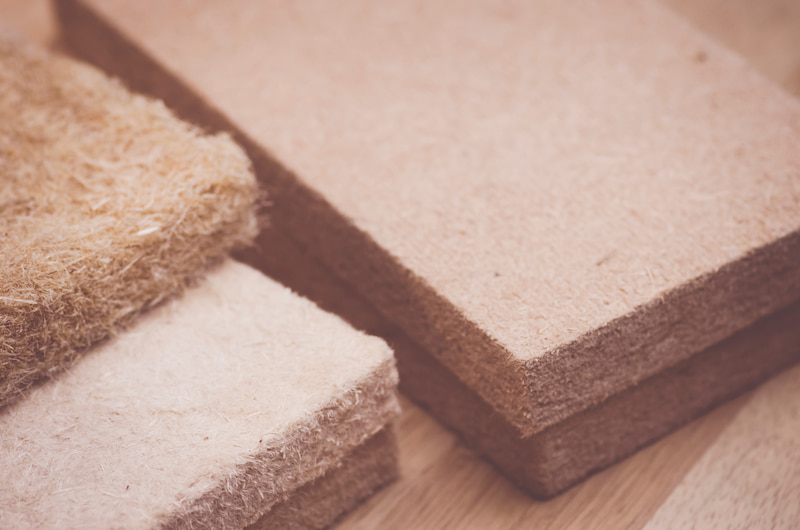
Bio-based insulation materials (wood fiber, hemp, cork, sheep’s wool): particularly suitable for old masonry where moisture management is an important criterion, and eligible for the maximum Klimabonus rate of €115/m² in 2026

Mineral insulation (rock wool, glass wool): solid value for money, good thermal properties, non-combustible, compatible with both under-plaster systems and cladding.
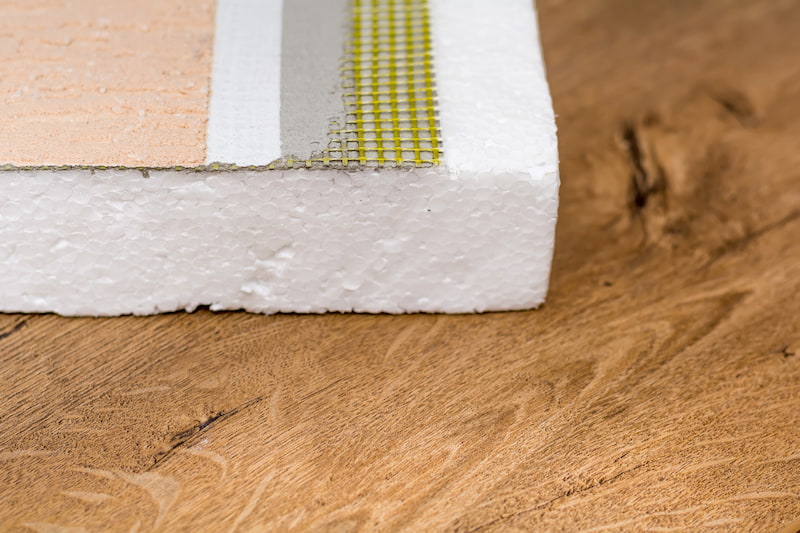
Synthetic insulation (expanded polystyrene, polyurethane): easy to install and lightweight, but standard EPS no longer qualifies for the Klimabonus since 2024; only products made from at least 50% recycled materials are eligible for a reduced subsidy of €75/m²
The chosen material also influences the type of finish: plaster, ventilated cladding, or double skin. Each system has its own visual appearance and its own characteristics in terms of wall moisture regulation.
Yes, an external thermal insulation (ETI) project requires a significant budget. But unlike many other types of work, it produces measurable long-term results: heating savings accumulate each winter and gradually recoup the initial investment. In the Luxembourg market, prices range from €180 to €280/m², including installation and materials. The exact price you pay will depend on the material chosen, the surface area of the facade to be treated, site accessibility, and the specific characteristics of your building.
Rather than relying on a general price range, submit your project details using our quote request form, specifying the surface area and the type of service you require. Our sales team will get back to you quickly with a quote tailored to your specific situation.
Ask our team of experts for advice
Financing an exterior insulation project in Luxembourg never means bearing the entire cost alone. Several schemes exist to reduce your actual expenses, and they can be combined. The most central one is the Klimabonus, administered by the Environment Agency (AEV).
To be eligible, your property must have had a building permit for more than 10 years. Another non-negotiable condition: the application for preliminary approval must be submitted to the Single Window for Housing Assistance before any work begins, and no later than December 31, 2025 (source: guichet.public.lu).
Key points to keep in mind:
Wood fiber, hemp, sheep’s wool, and mineral wool in ventilated cladding: €115/m² of Klimabonus in 2026. Bonded mineral wool: €60/m²
When a project involves multiple elements simultaneously, an energy audit conducted by a certified professional becomes mandatory before any application for assistance. This audit itself is eligible for financial support. Klima-Agence also offers free support to help households prioritize their renovations and understand the available funding mechanisms.
Isoleaz manages all the administrative formalities of your application, ensuring you don’t miss out on any of the financial assistance your project entitles you to.
Discover in detail all the grants and subsidies available for your insulation work in Luxembourg.
Discover the available bonuses