Your expert in isolation of interior walls
Isoleaz assists you with the insulation of your interior walls in Luxembourg.
Isoleaz assists you with the insulation of your interior walls in Luxembourg.
Home » Interior walls insulation
Our experts will assist you in obtaining grants for insulating your home.
We provide personalized support for each project before, during and after the work.
Collaborating with Isoleaz guarantees quality work by certified experts.
EXCELLENTTrustindex vérifie que la source originale de l'avis est Google. Je suis très satisfaite du bon travail effectué. Très Ravi deu résultats.je le recommande vivement. Merci a vousPublié sur GoogleTrustindex vérifie que la source originale de l'avis est Google. Entreprise très professionnelle, suivi très rapide à la demande de devis. Des professionnels très compétents, aimables et disponibles à répondre à toutes mes questions et proposer des solutions. À recommander !Publié sur GoogleTrustindex vérifie que la source originale de l'avis est Google. Entreprise très sérieuse qui a refait l'isolation et le ravalement de notre façade. Qualité au top et rapidité d'exécution remarquable. Quelques soucis de communication au début qui ont rapidement été réglés. Je tiens également à souligner le professionnalisme et la disponibilité d'Alex.Publié sur GoogleTrustindex vérifie que la source originale de l'avis est Google. tres satisfait du résultat et de l'équipe. Du très bon travailPublié sur GoogleTrustindex vérifie que la source originale de l'avis est Google. Très satisfait du résultat merci à Alex pour la qualité de son travail et sa sympathie. Je recommande à 100%Publié sur GoogleTrustindex vérifie que la source originale de l'avis est Google. Entreprise dynamique, équipe motivée et professionnelle. Travail réalisé dans les délais convenus (en tenant compte qu'ils ne gèrent pas encore la météo). Isoleaz s'occupe tout, je recommande!Publié sur GoogleTrustindex vérifie que la source originale de l'avis est Google. Ouvriers très soigneux pour l'isolation du plafond de mes caves. Le travail était pourtant délicat en raison des nombreux tuyaux, chemins de câbles et autres fixés au plafond. Travail très professionnel.Publié sur GoogleTrustindex vérifie que la source originale de l'avis est Google. Merci à ISOLEAZ. Les travaux d'isolation des pignons de notre maison ont été parfaitement réalisés. Travail propre et soigné. Nous sommes très satisfaits.Publié sur GoogleTrustindex vérifie que la source originale de l'avis est Google. Société à recommander : Sylvain, le délégué commercial, n'a pas hésité à revenir chez moi pour répondre à mes questions. Les ouvriers ont très bien travaillé, très méticuleux, et très rapides. Et à propos du chef de chantier, Vincent, il est aussi très "pro". Et tout ça mérite les 5 étoiles :)Publié sur GoogleTrustindex vérifie que la source originale de l'avis est Google. Je suis vraiment ravi du travail effectué par les équipes Isolaez chez moi. Ils ont réalisé l'ensemble de l'isolation de la maison, et je n'ai eu aucun commentaire a faire étant donné le professionnalisme dont ils ont fait preuve, ce qui n'est pas commun.
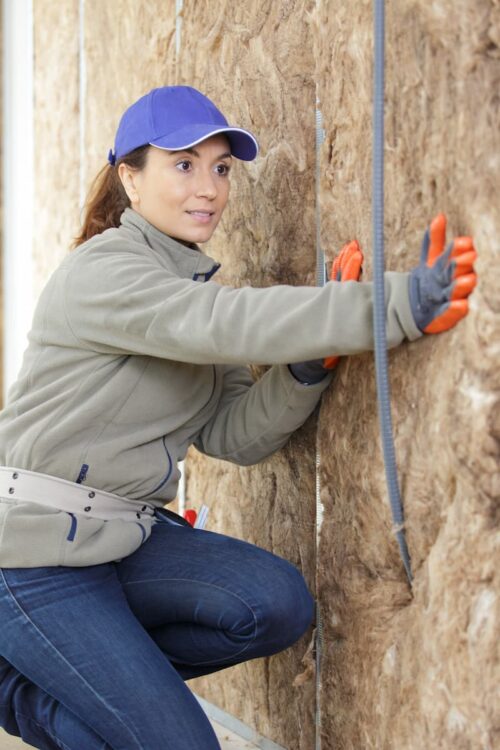
Interior wall insulation in Luxembourg is Isoleaz’s core business. Every project is different: renovating an older property, seeking greater comfort without altering the facade, or working within the constraints of the building or its surroundings. Our experts will visit your property, examine it in detail, guide you toward the solution best suited to your needs, and remain available until the project is complete.
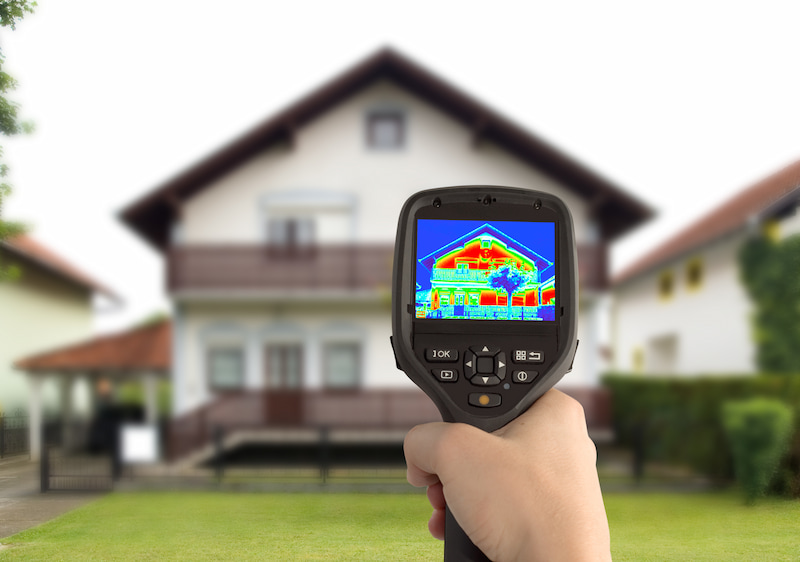
Winter or summer, the walls of an uninsulated home allow heat to escape or enter without resistance. This forces heating systems to work harder to compensate, resulting in higher energy bills. Between 20 and 25% of a home’s heat loss occurs through the walls: this is one of the most significant, and therefore one of the most cost-effective, areas to address in an energy renovation project.
There are two ways to remedy this: by working from the outside or the inside. Exterior insulation more effectively eliminates thermal bridges but requires a larger budget and involves work on the facade. Interior insulation, on the other hand, delivers significant thermal performance without altering the building’s exterior envelope, and is generally more affordable. Energy bill savings can reach 25%, making it a particularly popular option among Luxembourg homeowners.
What truly motivates people to choose interior insulation are the tangible benefits they offer from the very first months:
Several constraints should be anticipated before starting:
Comparing these points with your actual situation and priorities remains the best way to determine if interior insulation is the right solution for your home.
Even before the first panel is installed, thorough preparation largely determines the success of the project. Several points must be addressed beforehand to ensure the insulation is effective in the long term.
The existing wall covering is the first element to examine. Wallpaper left in place hinders moisture evaporation and compromises the adhesion of the materials: its complete removal is essential before any work begins.
Next comes the inspection of the seals around the windows and doors. Deteriorated seals around windows or doors allow cold air to circulate and directly reduce the effectiveness of the insulation work that will be carried out immediately afterward.
Thermal bridges must be mapped during the design phase, not during construction. These thermal bridging points are concentrated at the junctions between walls and floors or around window and door frames: leaving them untreated creates weak points that compromise the entire insulation system.
One last point not to be overlooked: the fixtures embedded in the walls, such as outlets, switches, and ventilation ducts. Inventorying them before work begins prevents any damage during installation. Our teams take these constraints into account from the planning stage, ensuring that the project runs smoothly without improvisation or unpleasant surprises.
Ask our team of experts for advice
Behind every interior insulation project lies a choice of material that has a significant impact on the outcome: the level of thermal insulation achieved, acoustic performance, long-term moisture management, and overall durability. Luxembourg homeowners now have access to three main product families, each with distinct characteristics.
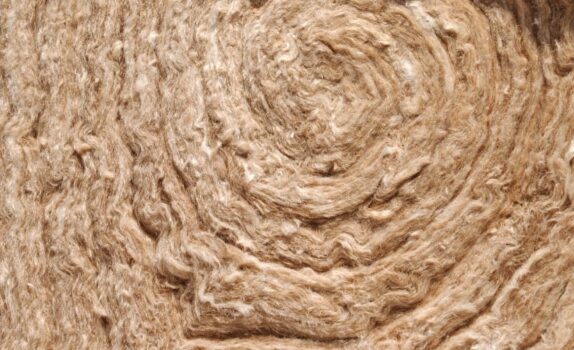
Glass wool and rock wool are the quintessential representatives of this family. The former is made from melted sand, the latter from volcanic rock heated to very high temperatures. Their balance of thermal efficiency, fire resistance, and durability is well-established, all at a price that remains within reasonable ranges. Rock wool stands out due to its higher density and compressive strength, two qualities that make a difference in applications where the insulation is subjected to repeated mechanical stress.
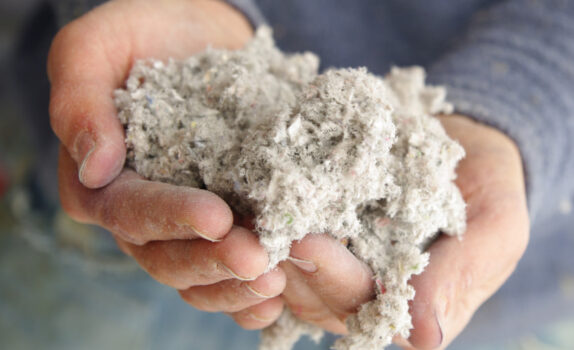
Hemp, wood fiber, cork, cellulose wadding: these plant-based or natural materials are gaining popularity among homeowners who are mindful of the environmental impact of their renovations. Beyond their thermal and acoustic performance, which rivals other types of insulation, these materials offer a particularly useful benefit: they naturally regulate ambient humidity, thus helping to maintain healthy indoor air quality, especially in well-sealed homes. While the initial cost may be slightly higher, for many, the environmental benefits justify the difference.
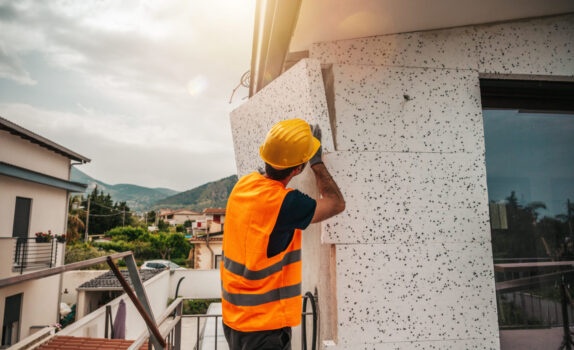
Expanded polystyrene, extruded polystyrene, polyurethane: this family of materials is distinguished above all by its ability to achieve high thermal performance with reduced thicknesses. In rooms where every centimeter counts, this advantage is significant. Their resistance to moisture is also a major strength. On the downside, their production relies on fossil resources, and their environmental footprint remains less favorable than that of bio-based materials, even if they are technically among the top performers.
Our Isoleaz advisors will work with you to determine the material that best suits your home, taking into account your budget, the layout of the spaces, and your insulation performance requirements.
To insulate a wall from the inside, two methods coexist on the market, and the choice between them depends primarily on the condition of the substrate and the specific constraints of the construction site.
The first method, insulation under a metal frame, involves erecting a structural framework of profiles in front of the existing wall, into which the insulation is then placed. A plasterboard panel is then fixed to this framework to create the interior surface. This approach naturally accommodates the wall’s irregularities without requiring any prior preparation of the substrate. It also offers valuable flexibility for running electrical cables or ventilation ducts.
The second method, bonded lining, involves applying panels combining rigid insulation and plasterboard directly to the wall, fixed with adhesive mortar. It is well-suited to walls in good condition with smooth surfaces, and its installation is faster. Many smaller projects or situations where space loss must be minimized are handled using this technique.
Ask our team of experts for advice
Several factors influence the budget from one project to another: the total surface area of the walls to be treated, the chosen material, the installation technique, and the building’s specific characteristics. The construction market in Luxembourg has structurally higher cost levels than in neighboring countries, a fact that must be factored into the initial estimates.
For most projects, the budget ranges from €50 to €90 per square meter, excluding VAT, including labor and materials. This minimum can be exceeded depending on the complexity of the work or the quality of the materials selected.
At Isoleaz, a detailed quote is provided within 24 hours, giving you a clear understanding of the actual cost before you commit to anything.
Discover in detail all the grants and subsidies available for your insulation work in Luxembourg.
Discover the available bonuses